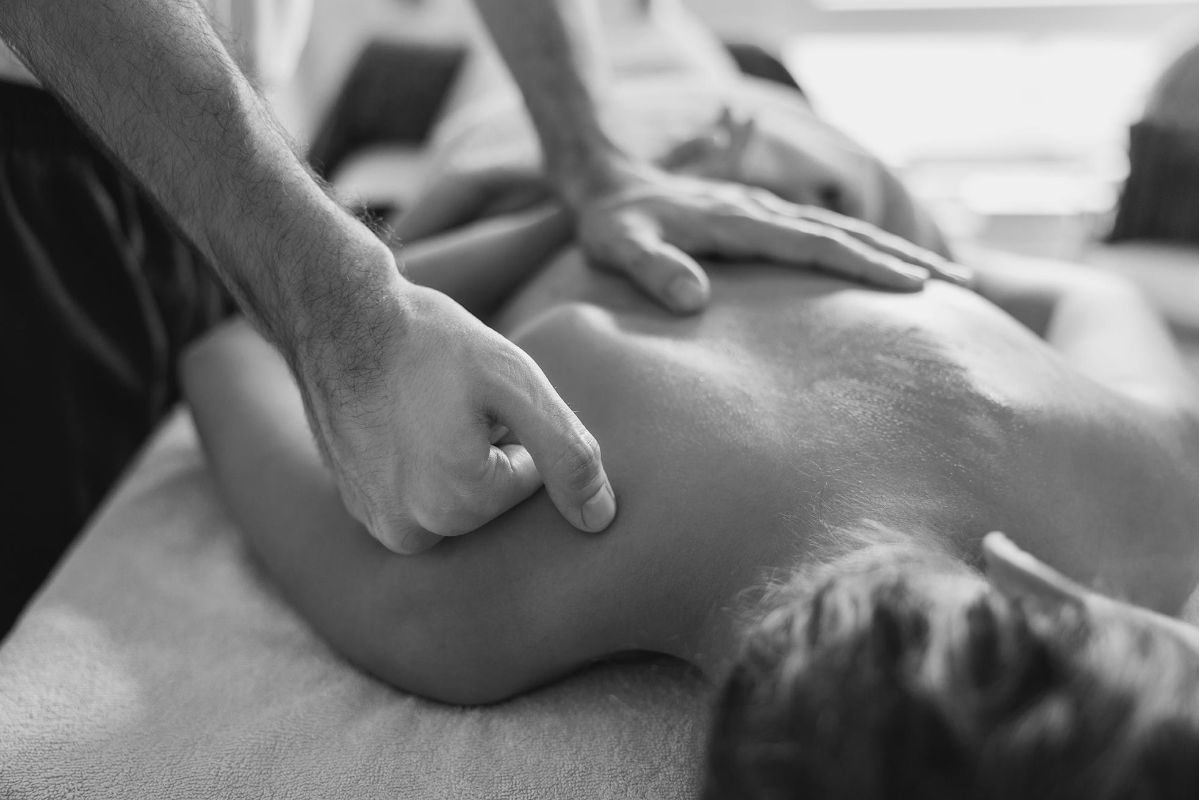
𝐌𝐚𝐬𝐬𝐚𝐠𝐞 𝐓𝐡𝐞𝐫𝐚𝐩𝐲, 𝐇𝐨𝐦𝐞𝐨𝐬𝐭𝐚𝐬𝐢𝐬, 𝐚𝐧𝐝 𝐂𝐨𝐫𝐭𝐢𝐬𝐨𝐥: 𝐄𝐯𝐢𝐝𝐞𝐧𝐜𝐞-𝐁𝐚𝐬𝐞𝐝 𝐏𝐡𝐲𝐬𝐢𝐨𝐥𝐨𝐠𝐢𝐜 𝐄𝐟𝐟𝐞𝐜𝐭𝐬
Massage therapy reliably induces short-term parasympathetic activation and transient cardiovascular modulation. Evidence from controlled trials and systematic reviews shows that moderate-pressure massage increases high-frequency heart-rate variability (HF-HRV), reduces the LF/HF ratio, slightly lowers resting heart rate and blood pressure, and transiently enhances peripheral perfusion and skeletal muscle relaxation. Neuroendocrine effects—small, brief reductions in peripheral cortisol and minor changes in serotonin- and dopamine-associated markers—are inconsistent and generally below clinically meaningful thresholds after a single session. Preliminary immune and lymphatic findings are encouraging but remain exploratory due to small sample sizes and methodological heterogeneity. Overall, massage represents an evidence-based, safe adjunct for acute stress reduction and symptomatic relief and should not be framed as a durable endocrine or immune therapy until larger, pre-registered, standardized RCTs with extended follow-up establish clinically meaningful long-term effects.
Randomized controlled trials and systematic reviews converge on a clear, evidence-based conclusion: properly administered moderate-pressure massage elicits reliable, acute parasympathetic shifts. These autonomic responses are most consistently evidenced as increases in high-frequency heart-rate variability (HF-HRV), reductions in the low-frequency/high-frequency ratio (LF/HF), minor decreases in resting heart rate, and transient reductions in systolic and diastolic blood pressure (Diego & Field, 2009; Field, 2014; Monteiro Rodrigues, Rocha, Ferreira, & Silva, 2020). These effects typically occur during and immediately following intervention, representing transient homeostatic recalibration rather than sustained alterations in autonomic set-points.
Physiologic correlates quantified in controlled studies include brief declines in cardiopulmonary measures, regionally increased microvascular perfusion, and reductions in muscle spindle–mediated tone, consistent with lower baseline skeletal muscle tension (Field, 2014; Monteiro Rodrigues et al., 2020). These local and systemic effects are demonstrable acutely post-intervention but generally attenuate within 24–48 hours in the absence of repeated sessions.
Neuroendocrine effects are modest. Randomized and controlled trials report minor, transient changes in peripheral markers associated with serotonin and dopamine, accompanied by small reductions in salivary or plasma cortisol after single sessions (Field et al., 2005; Seifert et al., 2015). Peripheral marker changes do not provide direct evidence of central neurotransmitter shifts. Cortisol reductions are typically small, inconsistent across studies, and often below clinically meaningful thresholds (Moyer, Seefeldt, Mann, & Jackley, 2011; Bennett et al., 2016). Longitudinal studies in caregivers and clinical populations suggest the possibility of modest cumulative cortisol reductions with repeated massage, yet these trials are small, heterogeneous, and preclude definitive conclusions regarding sustained endocrine effects (Pinar & Afsar, 2015).
Preliminary mechanistic and pilot randomized trials indicate potential short-term immune modulation, including transient increases in natural killer cell activity and altered mitogen-stimulated cytokine responses; however, these results derive from small samples and exploratory protocols, necessitating replication in adequately powered, pre-registered trials before clinical claims are warranted (Rapaport, Schettler, & Bresee, 2010, 2012). Likewise, measurable increases in lymphatic flow, transient diuresis, and local circulatory mobilization are demonstrable acutely, but current evidence indicates these are temporary physiologic shifts rather than sustained changes in fluid balance or immune competence (Cambron & Werner, 2016; Field, 2014).
Taken together, the most robust and reproducible evidence supports massage therapy as a safe, physiologically plausible intervention to promote acute parasympathetic activation, lower subjective stress, and induce transient relaxation and modest cardiovascular relief. The evidence does not substantiate broad claims of durable endocrine reprogramming, long-term immune enhancement, or large sustained shifts in baseline autonomic function following isolated sessions.
Key limitations in the literature include brief follow-up windows (rarely beyond 24–48 hours), heterogeneous massage modalities and dosing, small and sometimes non-independently funded trials, inconsistent blinding and outcome measures, and a paucity of adequately powered dose-response studies. Future research should prioritize larger, pre-registered RCTs with standardized protocols, blinded outcome assessment where feasible, intention-to-treat analyses, and follow-up periods of three months or longer to clarify which effects are transient versus sustained and to identify responder subgroups (Field, 2014; Moyer et al., 2011; Van Dijk et al., 2020).
Clinically, massage should be framed as an evidence-based adjunct for acute autonomic down-regulation, symptom relief, and perceived stress reduction. Interindividual variability should be anticipated; clinicians may offer trial interventions with systematic outcome monitoring, ensuring expectations align with the current evidence base rather than promoting unsubstantiated long-term endocrine or immune benefits.
𝐑𝐞𝐟𝐞𝐫𝐞𝐧𝐜𝐞𝐬 (Δ𝐏𝐀 𝟕𝐭𝐡 𝐄𝐝𝐢𝐭𝐢𝐨𝐧)
Bennett, S., Bennett, M. J., Chatchawan, U., Jenjaiwit, P., Pantumethakul, R., Kunhasura, S., & Eungpinichpong, W. (2016). Acute effects of traditional Thai massage on cortisol levels, arterial blood pressure and stress perception in academic stress condition: A single blind randomised controlled trial. Journal of Bodywork and Movement Therapies, 20(2), 286–292. https://doi.org/10.1016/j.jbmt.2015.10.005
Cambron, J., & Werner, R. (2016). Comparing the effects of rest and massage on return to homeostasis following submaximal aerobic exercise: A case study. Massage Therapy Foundation Research Perch Podcast. https://massagetherapyfoundation.org/comparing-effects.../
Diego, M. A., & Field, T. (2009). Moderate pressure massage elicits a parasympathetic nervous system response. International Journal of Neuroscience, 119(5), 630–638. https://doi.org/10.1080/00207450802329605
Field, T. (2014). Massage therapy research review. Complementary Therapies in Clinical Practice, 20(4), 224–229. https://doi.org/10.1016/j.ctcp.2014.07.002
Field, T., Hernandez-Reif, M., Diego, M., Schanberg, S., & Kuhn, C. (2005). Cortisol decreases and serotonin and dopamine increase following massage therapy. International Journal of Neuroscience, 115(10), 1397–1413. https://doi.org/10.1080/00207450590956459
Monteiro Rodrigues, L., Rocha, C., Ferreira, H. T., & Silva, H. N. (2020). Lower limb massage in humans increases local perfusion and impacts systemic hemodynamics. Journal of Applied Physiology, 128(5), 1217–1226. https://doi.org/10.1152/japplphysiol.00437.2019
Moyer, C. A., Seefeldt, L., Mann, E. S., & Jackley, L. M. (2011). Does massage therapy reduce cortisol? A comprehensive quantitative review. Journal of Bodywork and Movement Therapies, 15(1), 3–14. https://doi.org/10.1016/j.jbmt.2010.06.001
Pinar, R., & Afsar, F. (2015). Back massage to decrease state anxiety, cortisol level, blood pressure, heart rate and increase sleep quality in family caregivers of patients with cancer: A randomised controlled trial. Asian Pacific Journal of Cancer Prevention, 16(18), 8127–8133. https://doi.org/10.7314/apjcp.2015.16.18.8127
Rapaport, M. H., Schettler, P., & Bresee, C. (2010). A preliminary study of the effects of a single session of Swedish massage on hypothalamic–pituitary–adrenal and immune function in normal individuals. Journal of Alternative and Complementary Medicine, 16(10), 1079–1088. https://doi.org/10.1089/acm.2009.0634
Rapaport, M. H., Schettler, P., & Bresee, C. (2012). A preliminary study of the effects of repeated massage on hypothalamic–pituitary–adrenal and immune function in healthy individuals. Journal of Alternative and Complementary Medicine, 18[8], 789–797. https://doi.org/10.1089/acm.2011.0071
Seifert, G., Reif, M., Rihs, C., Krause, I., Seifert, C., & Bödding, K. (2015). A randomised, controlled, single-blinded study on the impact of a single rhythmical massage (anthroposophic medicine) on well-being and salivary cortisol in healthy adults. Complementary Therapies in Medicine, 23(5), 685–692. https://doi.org/10.1016/j.ctim.2015.07.008
Van Dijk, W., Huizink, A. C., Müller, J., Uvnäs-Moberg, K., Ekström-Bergström, A., & Handlin, L. (2020). The effect of mechanical massage and mental training on heart rate variability and cortisol in Swedish employees—A randomized explorative pilot study. Frontiers in Public Health, 8, 82. https://doi.org/10.3389/fpubh.2020.00082